I asked a familiar investor: “Do you fear when you make an investment in an idea?” His answer: “Of course! Every time. But it doesn’t stop me.” “Why?” - I asked him. “Because nobody knows the future!” - that answer turned me upside down. That simple point pushed me into a hole of reflection about it. Why do so many people fear the future? And how do we make a decision in fear?
Everyone has fear, it’s normal. There are two types of fear: one protects you, and the other one paralyzes you. Maybe you fear parachute jumping. In reality, you don’t fear parachute jumping, but you fear dying or being injured in the process of that. Our mind create powerfull image of potential future, and this future is not happy for you :) This kind of fear protects your life from something bad.
At the same time, we have enough other useless fears. We fear changing our jobs or investing in ideas, or even meeting with someone. Your mind creates a powerful image of a potential future, and it is not a happy one. Why? How does our mind know the future? In the case of jobs or ideas, it’s not very easy know all the obstacles.
Scientists have discovered that a personal vision of the future depends on personal experience. Cognitive psychologist and professor at the Rotman Research Institute in Toronto, Endel Tulving, studied a patient with a rare form of amnesia. This person remembered practically all the facts he had known before the illness, but did not retain so-called episodic memories.
Episodic memories include those that:
First, are somehow connected personally to us (that is, essentially autobiographical memories);
Second, include temporal (when a certain event occurred), spatial (where this event occurred), and emotional characteristics (how you perceived the event at the time, what feelings it evoked in you).
Suppose you know that there is a band called Queen, whose main hits are Bohemian Rhapsody, We Will Rock You, and We Are the Champions, that its lead singer was Freddie Mercury, who was gay and died of AIDS. And that he sang a wonderful duet with Montserrat Caballé called Barcelona. All this is so-called semantic memory, or memory for facts.
But have you ever attended a concert by this band? Or perhaps watched a film about them? Did it touch your soul? How did you first become acquainted with their music?
These questions are already about episodic memory.
So, Tulving identified a patient who could not recall events from his past, yet retained fairly precise knowledge about the world. What do you think would happen if Tulving asked this patient about his plans for the future?
I think you’ve guessed — nothing. The patient literally fell into a stupor when asked what he planned to do tomorrow. That is, without episodic memory, in the literal sense of the word, we cannot imagine our future at all.
Or, if we look at it from another angle: in order to imagine our future, we must flip through the album of our autobiographical memories and stitch from them some image of our possible future self.
If there is nothing to stitch it from — that is, if known facts are in no way connected with our personal motivations and experiences — then even having all the data in our hands, we cannot assemble them into a picture of the future.
Even knowing everything, we will not be able to imagine what will happen tomorrow.
Such is the peculiarity of our memory: it is not enough for us to know certain facts, to be theoretically informed about something, in order to see the future to which they relate. No, in any case, we rely only on our life experience.
Is it the same with fears? “If you’re offered a seat on a rocket ship, don’t ask what seat. Just get on.” - sounds good, but it depends on previous successful flights? Doesn’t?
Do people who don’t fear anything have only successful experiences, or do they have enough bad ones? Is failure a part of a successful future? Were many successful decisions based on failure?
Some fear depends on us (it’s useful fear), some fear doesn’t (it’s useless fear). I realized that science and art are born not only of geniuses but also of people who know how to confront their useless fears. They can find themselves. They can be yourself.
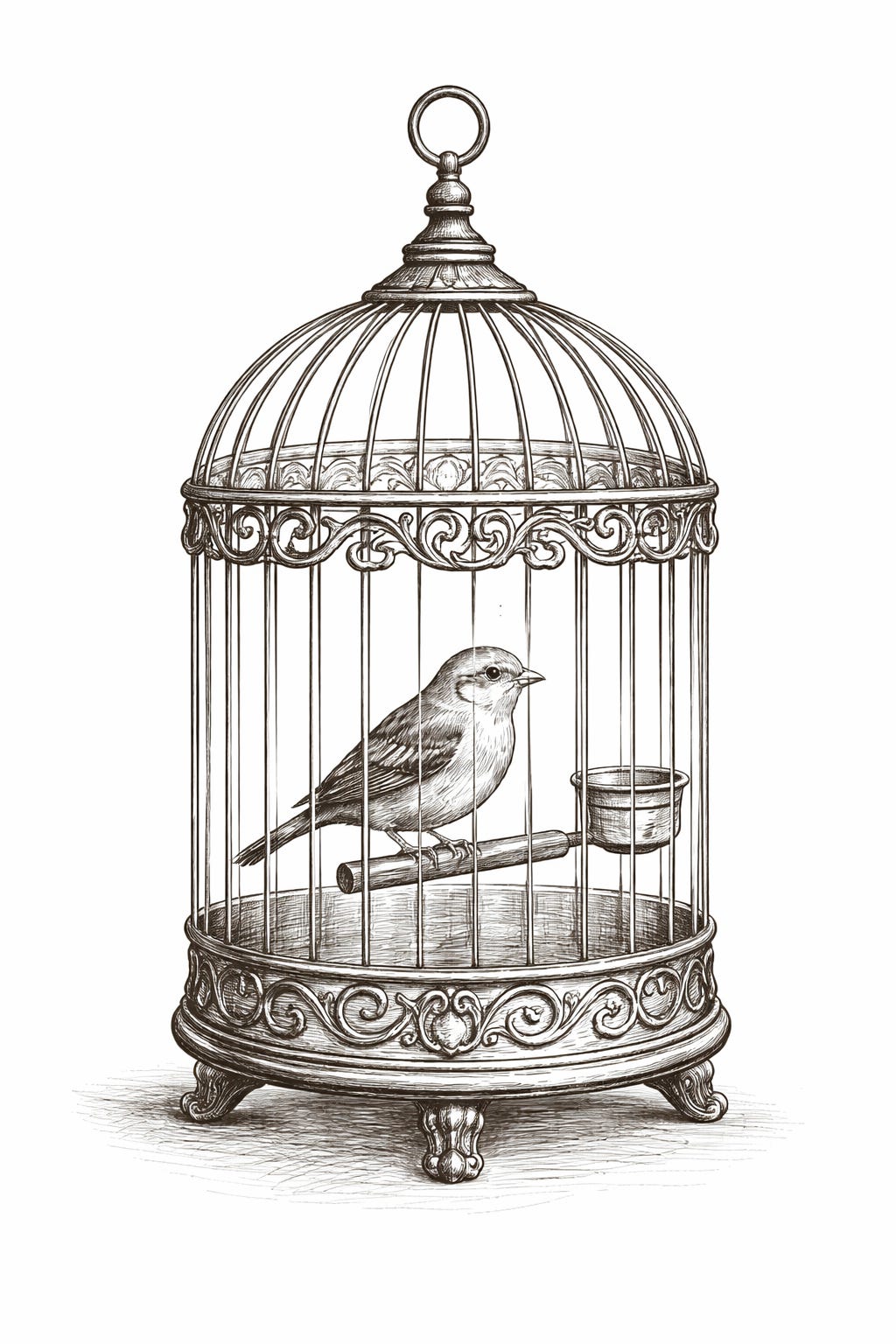
Our useless fears are like birds in our heads. Very often, we try to catch them. Create a cage for them. But our fears are just concepts of the future that we keep in cages. Instead of releasing them, we listen to them.
I spoke with my son. Like all teenagers, he is in a cross-transition period. His thoughts sometimes transform into fears, like birds. Those fears paralyze him in making decisions and finding happiness. Those “birds” (useless fears) in his head disturbed him every day and night. He didn’t sleep well at night. He dared to talk about it with me. I told him about the “birds” and asked him to set them free, because nobody knows the future. After that, he slept well.
When I want to see my future, I try to see my fears. If I can face my useless fears, I will change my future.